

In 2026, the Dominican Republic stands as one of the real estate investment markets with the absolute best ratio of profitability, legal certainty, and tax advantages in the world. Not just the Caribbean. The world.
With an average gross yield of 6.74%—with certain areas exceeding 11%—prices have not yet priced in the growth projected for the next five years. Furthermore, if you structure your entry correctly, the country’s tax legislation can exempt you from property taxes for up to 15 years.
In this guide, you will find exactly that: why you should invest in the Dominican Republic in 2026, which areas to target, what returns you can expect, how the CONFOTUR tax regime works, and the exact steps you need to take to put your capital to work.
Why Invest in the Dominican Republic in 2026?
Most international investors discover the Dominican Republic too late—when prices have already surged and the best projects are completely sold out. This article exists to ensure you are not one of them.
For over a decade, the Dominican Republic has combined three factors that rarely align: sustained economic growth above 5%, record-breaking international tourism, and tax legislation explicitly designed for foreign investors. In 2026, this equilibrium is not just holding steady; it is accelerating.
An Economy Growing While Yours Stagnates
The Dominican Republic recorded a 5% growth rate in 2024. In 2025, it moderated to 3% due to the global macroeconomic context; however, the Latin American average was just 2.4%. The DR remained one of the most robust economies in the region. The IMF projects a return to 4.5% in 2026 and 5% in the medium term.
Inflation is tightly controlled at 3.7%, unemployment is at historic lows, and international reserves cover more than five months of imports.
Additionally, there is a crucial factor that many people overlook: all real estate transactions are conducted in US Dollars (USD).
The Most Robust Tourism Market in the Caribbean
The DR has been the top tourist destination in the Caribbean since 2005. Moreover, 2025 was its best year yet, pulling in 960,000 tourists in December alone—compared to a pre-pandemic peak of 667,000 for that month. Average hotel occupancy stands at 71% annually, peaking at 83.7% in February.
For a real estate investor, these numbers translate to one thing: assets with structural, non-cyclical demand. Even in 2025, amid a global economic slowdown and geopolitical tensions, Dominican tourism kept growing. It is no coincidence that an increasing number of institutional investors are rushing into the DR.
Prices That Have Not Yet Factored in What’s Coming
Compared to other Caribbean markets that no longer offer attractive entry points, you can still find apartments in prime tourist zones at around $2,200 USD/m², starting from $150,000 USD.
Markets like Barbados or the Bahamas have gone years without offering real high-yield profitability, in the Dominican Republic, you can still buy before prices price in the next five years of growth.
Institutional money has already arrived: Spain was the second-largest foreign investor in 2025, trailing only the United States. But that does not mean the party is over. We are currently in a sweet spot—a market that is fully validated but still offers massive upside.
BONUS: Your Investment in the DR Grants You a Second Passport
Beyond profitability and tax optimization, there is a third return on investment that most investors fail to calculate: freedom.
Investing $200,000 USD in a property authorized by the Ministry of Tourism—exactly the type of asset discussed in this guide—grants you direct access to the Investor Residence Visa. This provides permanent residency, renewable every 4 years, with full territorial taxation from day one.
From that residency status, a Dominican passport is legally just 6 months away (though in practice, processing usually takes closer to 2 years).
This is a legitimate, rapid-timeline Plan B that also opens the door to accelerated naturalization in countries like Mexico or El Salvador in just 2 years.
If you want to understand in detail how residency, territorial taxation, and the naturalization process work, read our comprehensive guide: Fiscal Residency in the Dominican Republic: 0% Taxes.
The Best Areas to Invest in the Dominican Republic
The Dominican Republic boasts over 1,600 kilometers of coastline alongside an expanding domestic market. Not all regions perform the same for investors, and choosing the right location can mean a difference of several percentage points in your final yield.
Punta Cana and Bávaro: The Most Liquid Asset in the Caribbean
Home to the busiest airport in the Caribbean, handling 61% of all air arrivals to the country. It offers consolidated infrastructure and the highest market liquidity when it comes time to exit and sell.
Gross yields range between the 6.74% country average and up to 11% in exceptionally located projects. Furthermore, a new Rental and Eviction Law came into effect in 2025, providing landlords with significantly higher legal certainty.
Santo Domingo: Stable Yields Independent of Tourism
The capital of a country of 11 million people with a booming middle class. Prices range from $800 USD/m² in expanding districts to $3,500 USD/m² in the premium Distrito Nacional. It delivers yields of 7–9%, backed by a stable tenant profile and constant local demand. It is the perfect complement if you already have vacation rental exposure in your portfolio.
Las Terrenas (Samaná): The Bet to Make Before Everyone Else Arrives
This area attracts a boutique European tourism demographic: more mature, discerning, and experience-oriented. Prices are still below those of Punta Cana, offering a higher potential for capital appreciation. This is the market you will wish you had entered five years from now.
Cap Cana: Ultra-Luxury and Exclusivity
Featuring a private marina, Jack Nicklaus-designed golf courses, and the fully operational St. Regis. It attracts ultra-high-net-worth international buyers who are not just looking for rental yields, but an exclusive store of value and a world-class second home.
It offers yields of 6–10% with the highest stability profile in the market.
Source: Global Property Guide. Estimated gross yields. Actual results depend on asset type, real occupancy, and property management.
What Exactly Should You Invest In?
Tourist and Residential Apartments: The most accessible entry point, starting at $150,000 USD. These are turnkey resort condos, ideal for hands-off vacation rentals via delegated property management.
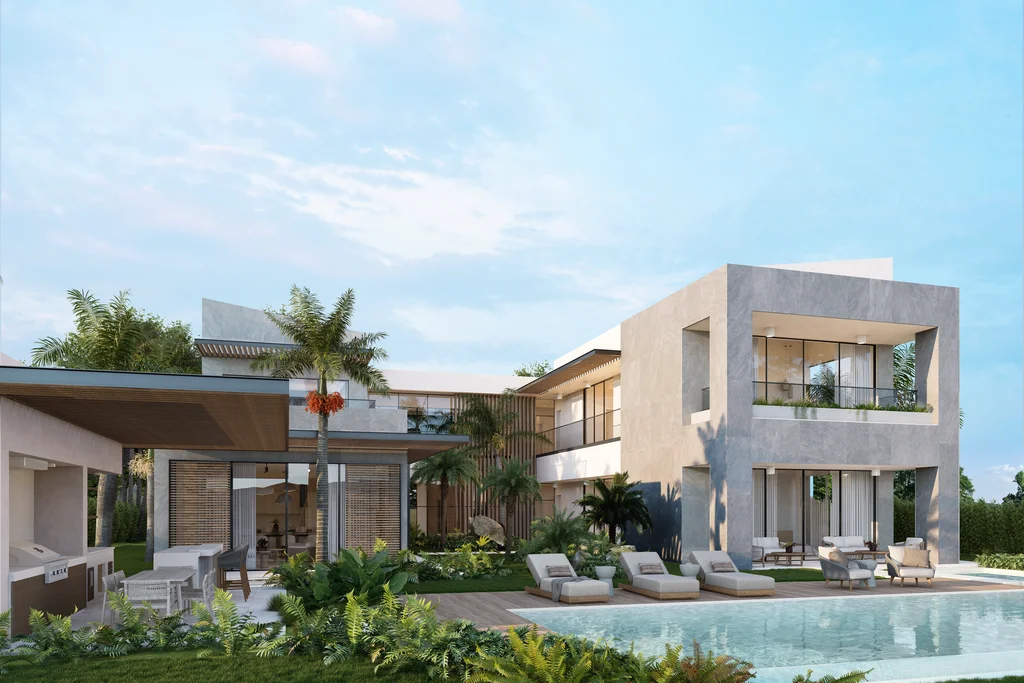
Standalone Villas: Higher price point, greater privacy, and a highly demanded product in the premium rental segment. Starting from $300,000 USD depending on the area.
A Second Home That Works for You: You use it whenever you want, and it generates revenue for the rest of the year. Real personal enjoyment meets real profitability.
Hotel Condos (Hilton, Wyndham, Meliá): You buy the unit, and the hotel brand manages everything. No Airbnb management, no dealing with guests, no direct operational hassle. Hands-free profitability from day one—the preferred product for investors who want market exposure without becoming landlords.
The best projects in the Dominican Republic don’t wait
Want to view the opportunities available right now in these areas? We can analyze your situation and present the options that best match your profile.
CONFOTUR: The Tax Benefit That Turns a Good Investment into an Excellent One
Up to this point, we have covered markets, areas, and yields. Now let’s look at what turns a good investment into an excellent one: a tax incentive that can last up to 15 years.
What is CONFOTUR and Why Does It Matter?
CONFOTUR administers Law 158-01 on Tourism Development.
Tourism is the lifeblood of the DR economy. If you invest in projects that support this sector, the government temporarily waives certain taxes so that investors build out the country’s tourism infrastructure. You win, the country wins. This perfect alignment of interests is precisely why this regulation has remained untouched for decades.
Projects approved under CONFOTUR grant two highly specific advantages to the buyer:
IPI (Property Tax) Exemption for up to 15 years: The Real Estate Property Tax completely disappears during this period. A recurring holding cost is simply eliminated.
Transfer Tax Exemption: A waiver of the standard 3% tax on the asset’s value upon purchase. On a $200,000 USD property, that is $6,000 USD that stays in your pocket at closing.
⚠️ What They Don’t Tell You About CONFOTUR
CONFOTUR does not exempt you from income tax (ISR) on rental revenues. When an agent tells you ‘you won’t pay any taxes for 15 years,’ they are being imprecise or simply do not know what they are talking about. The tax benefits differ for the developer versus the end buyer, and some investors are currently paying the price for making assumptions.
How to Invest in the Dominican Republic Step-by-Step
You now have the market context. Now let’s tackle the part most guides avoid because it requires careful planning: international investment does not begin in the Dominican Republic. It begins with you.
Those who skip this step usually face the consequences on their tax return the following year.
Two Key Fiscal Questions
First: Where is your tax residency? Where you legally pay taxes (not necessarily where you live) dictates the rules governing the money you generate in the DR.
Second: How and where is your investment capital held? Is it in a personal bank account? In a holding company? Tied up in another property you need to liquidate? Do you already have structures in third-party countries? Every scenario has an optimal way to structure entry, and a mistake here can cost more than the tax you were trying to avoid.
The Fiscal Impact in Your Home Country
Investing in the DR has tax implications back home. Does your country have a Double Taxation Treaty with the DR? Can you tax-credit the payments made there against what you owe at home? How will the funds leave your current structure, and what are the compliance implications? All of this must be calculated before committing capital.
There is no universal answer. There is only the right answer for your specific situation, which requires cross-border jurisdictional expertise.
Individual Persona vs. a Dominican Corporation?
Individual (Persona Física): Simplest route for a one-off investment. The property is titled directly in your name with no extra corporate structure. The downside: your personal liability and your investment are tied together, leaving you more exposed and limiting certain tax deductions.
Dominican Corporation (SRL or SA): Provides legitimate asset protection and corporate separation. It allows you to deduct operational expenses before calculating income tax, and in some scenarios, unlocks additional benefits under CONFOTUR. If you intend to scale or operate continuously, a corporate structure is the smartest move.
Off-Plan vs. Completed Properties
Off-Plan (Pre-construction): Lowest entry price and highest capital appreciation potential. In top-tier projects, you can expect a 30–40% increase on your invested capital by delivery. Developer risk is mitigated by exclusively choosing builders with proven track records and secured financing. Furthermore, we offer 0% interest financing structures directly through the developer during construction.
Completed Properties: Immediate cash flow from day one, zero timeline uncertainty, and a physical inspection before signing. This is ideal for investors prioritizing immediate yield. However, this segment is generally less competitive for investors and appeals more to those looking to relocate their personal residence to the DR.
What Taxes Do You Pay While the Asset Generates Income?
The Income Tax (ISR) on rental income stands at a flat 27% for non-residents. However, Dominican corporations are taxed on net income, meaning you can deduct operational and management expenses, which often makes the corporate route much more tax-efficient.
The Property Tax (IPI) is entirely waived if the project falls under CONFOTUR. Upon exit, there is no separate capital gains tax for non-resident individuals on real estate sales.
The Dominican Republic vs. The World’s Top Investment Markets (2026)
The Dominican Republic is not the only market where it makes sense to invest in 2026. However, it is one of the few that masterfully balances high yields, legal security, and tax incentives.
Here is how it compares to other leading global markets today:
Looking to invest in the Dominican Republic?
Or would you prefer a comprehensive analysis of your situation to discover your ideal market?
Either way, we’ve got you covered!
Simply secure your FREE INITIAL CONSULTATION by clicking here:
FAQs
Yes, and the data conclusively proves it. The Dominican Republic has maintained a sustained economic growth rate above 5% for over a decade, has been the top Caribbean tourist destination since 2005, and closed out 2025 with its fourth consecutive record in Foreign Direct Investment (FDI). With average rental yields exceeding 6.74% (reaching up to 11% in hot zones) and an 11% year-over-year property appreciation in 2025, it is one of the few markets worldwide where profitability, asset security, and massive tax breaks perfectly intersect.
The most established sector is tourism real estate, with entry points ranging from vacation condos at $150,000 USD to premium villas and hotel-branded fractional/condo units operated by global chains like Hilton, Wyndham, or Meliá. Beyond real estate, you can also invest directly in Dominican businesses, which qualifies you for the Investor Visa. For the international investor profile, beachfront and tourist real estate remains the asset class offering the best mix of yield, liquidity, and tax incentives.
CONFOTUR is the government entity that manages Law 158-01 (Tourism Development Law). Through it, the Dominican state grants substantial tax exemptions to individuals and funds investing in certified tourism projects. For a property buyer, this means a total exemption from the annual Property Tax (IPI) for up to 15 years, as well as a waiver of the 3% Real Estate Transfer Tax at purchase. On a $200,000 USD acquisition, that saves you $6,000 USD upfront at closing. Note that CONFOTUR does not exempt you from paying income tax on rental earnings.
The tax exemptions granted by CONFOTUR last for up to 15 years from the date the specific project is certified by the Ministry of Tourism. It is critical to understand that this benefit is tied to the project, not the buyer. If you buy a unit in a project that was certified three years ago, you inherit the remaining 12 years of exemptions, not a fresh block of 15 years. Verifying the exact issuance date of the certification is a mandatory step during due diligence.
Yes. Investing $200,000 USD or more in a property certified by the Ministry of Tourism gives you expedited access to the Investor Residence Visa. This status grants you full territorial tax benefits from day one and puts you on an accelerated path to a second Dominican passport in as little as 6 months. It remains one of the fastest, most cost-effective citizenship-and-residency-by-investment pipelines globally.